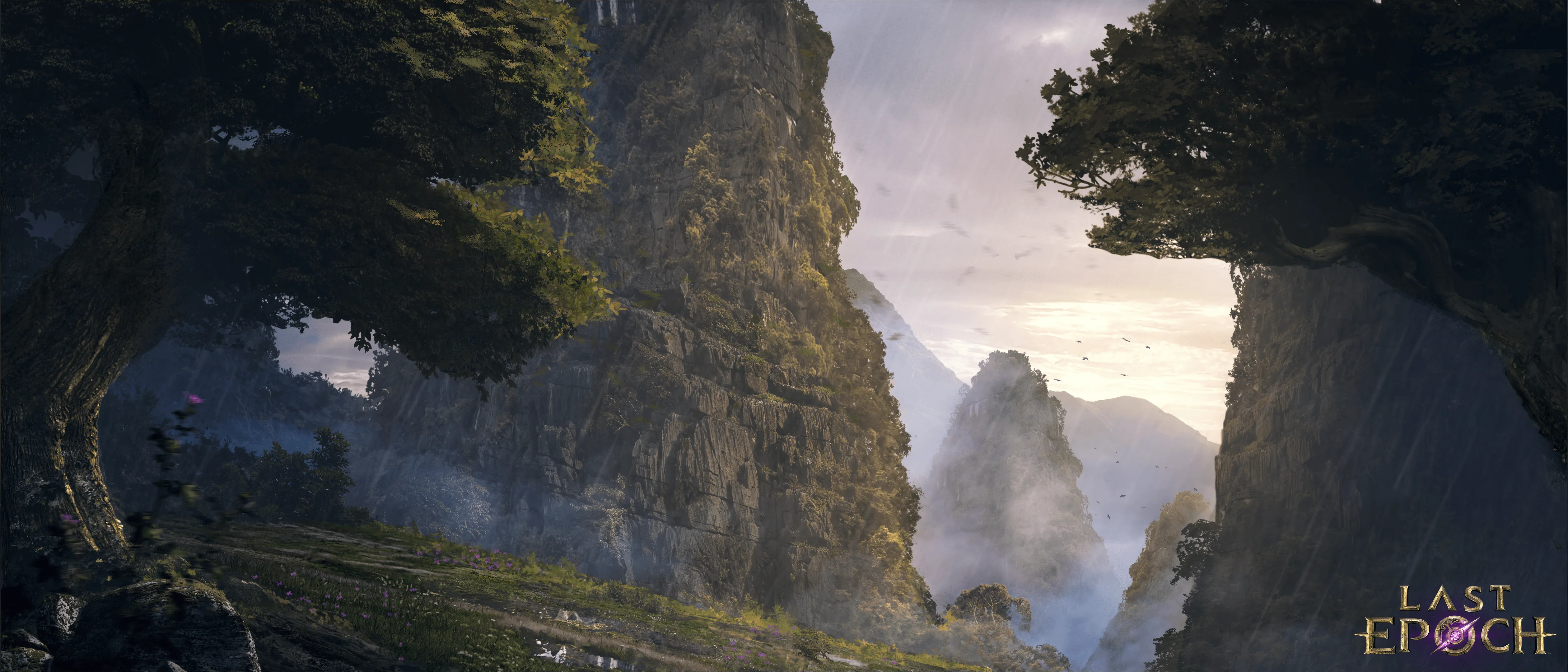
Last Epoch Season 3, named Beneath Ancient Skies, launched on August 21, 2025 as the Patch 1.3 update. Its headline additions were Chapter 10, the Ancient Era, the Primal Hunt encounter system, evolving Rift Beasts, Primordial Items, a new Lich skill, and extensive Lich, Necromancer, minion, faction, and quality-of-life changes.
This is a historical Season 3 guide. As of October 10, 2026, Last Epoch is in Season 5 and the released version is 1.5.2.1. Season 3 launch values and mechanics should therefore be treated as a record of how Patch 1.3 worked, not as confirmation of current rules. If you are playing the live version, verify any build-sensitive number or reward rule in the current game before planning around it.
Season 3 at a glance
| Season 3 feature | What Patch 1.3 introduced |
|---|---|
| Season name | Beneath Ancient Skies |
| Launch date | August 21, 2025 |
| Campaign expansion | Chapter 10, set in the Ancient Era after the battle with Majasa |
| Seasonal encounter | The Primal Hunt, built around Mysterious Rifts, Torn Rifts, caves, and evolving Rift Beasts |
| Main rewards | Ancient Bones, Primordial Materials, Primordial Uniques, and Primordial Exalted Items |
| New skill | Flay for the Lich mastery |
| Major mastery work | Lich passive rework, Necromancer updates, and broad minion improvements |
| Item faction work | Merchant’s Guild search, listing, token, and Bazaar interface upgrades |
| Interface improvements | More loot-filter presentation options, stash tools, forge clarity, and controller navigation updates |
Season 3 was more than a temporary encounter layered over the existing endgame. It added a full campaign chapter, new zones and enemies, an equipment category with a strict one-item limit, and a repeatable hunt in which player choices changed later versions of the same boss lineage.
The central loop was straightforward: find a rift, enter an Ancient Era cave, defeat a Rift Beast, choose whether to evolve its lineage, then meet stronger descendants with new abilities and rewards. That loop connected campaign zones, Monolith Echoes, a dedicated vendor, new crafting materials, and special Woven Echoes.
Chapter 10 and the Ancient Era
Chapter 10 continued the campaign after the battle with Majasa at the end of Chapter 9. The Traveler pursued Apophis into the Ancient Era, visiting Eterra before the ruined forms of those places seen elsewhere in the story. The update described primeval jungles, crystalline caverns, wild skies, prehistoric wildlife, and ancient civilizations coexisting in this earlier period.
Patch 1.3 added 17 campaign zones and 28 new enemies or variations of existing enemies. Some of those enemies also appeared outside the chapter in content such as Monolith Echoes. Completing Chapter 10 awarded the character +1 to every attribute, and that reward stacked with the corresponding bonus from completing Chapter 9.
For a player approaching the old Season 3 content in its original context, Chapter 10 served two purposes. It advanced the main story and established the Ancient Era environments, creatures, and characters used by the Primal Hunt. Skarven Bloodhorn, the friendly Wengari Hunt Master associated with the hunt, could also be found in The Garden, one of the new Ancient Era locations.
The chapter should not be confused with a separate seasonal reset or a new-character requirement. It was campaign content introduced by the Season 3 patch, while the Primal Hunt could appear in eligible campaign zones and Monolith Echoes. Those two parts of the update overlapped thematically but had different progression roles.
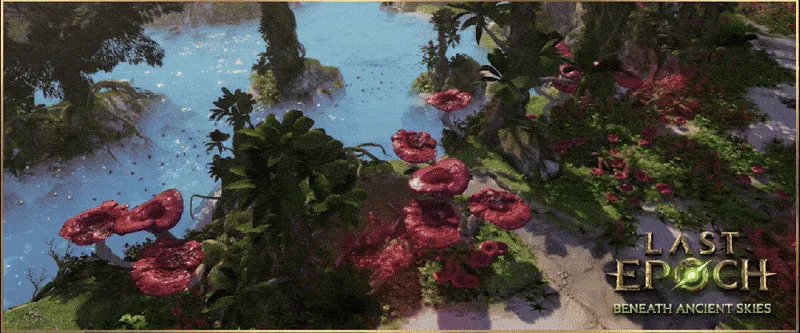
Chapter 10 moves the campaign into Eterra’s Ancient Era.
How the Primal Hunt worked at launch
The Primal Hunt was the main repeatable mechanic of Beneath Ancient Skies. At launch, eligible campaign zones and Monolith of Fate Echoes had a chance to contain a Mysterious Rift or Torn Rift. Quest Echoes and Arena Echoes were excluded. Echoes containing a Tomb or Cemetery also could not lead to the new cave side zones.
Starting a Rift Beast lineage
- Explore eligible campaign zones or Monolith Echoes until a rift appears.
- Enter the first Mysterious Rift to travel into the Ancient Era near a cave entrance.
- Meet Skarven Bloodhorn outside the cave. He explains the hunt, assists during the cave, and acts as the mechanic’s vendor.
- Fight through Ancient Era enemies inside the cave. These enemies drop Ancient Bones instead of gold.
- Reach the nest and defeat the Rift Beast guarding it.
- Choose whether to evolve the lineage or end it.
Choosing an Evolution added the selected trait to later Rift Beasts in that lineage. A trait could change the beast’s abilities, add body features, allow it to summon other enemies, alter its possible loot, and provide at least one guaranteed Primordial Material. Patch 1.3 launched with more than 60 Evolutions, and the same Evolution could not be selected twice within one lineage.
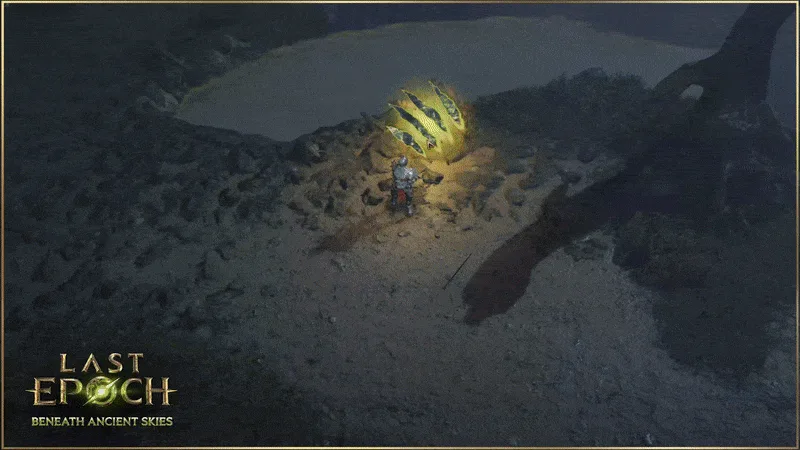
Mysterious Rifts lead players to the entrances of Ancient Era caves.
Advancing or ending the lineage
After evolving the first beast, later encounters changed from Mysterious Rifts to Torn Rifts. Entering a Torn Rift triggered an ambush by an evolved Rift Beast from the active lineage. These beasts retained the loot associated with their Evolutions and also dropped general loot.
After defeating between two and four Rift Beasts from Torn Rifts, the next rift became another Mysterious Rift. That rift returned the player to an Ancient Era cave, where another evolution could be selected after the beast was defeated. The sequence then repeated.
A lineage initially supported a maximum of four Evolutions. That limit could be raised to seven Evolutions after fully completing two lineages and completing the Rampant Coast Woven Echo. Once a lineage reached its maximum, defeating the next cave beast forced the lineage to end so that a new one could begin.
Ending a lineage awarded the non-Primordial unique Evolution’s End. Continuing instead made later encounters more complex and improved the beast’s reward potential. The official Patch 1.3 rules specifically stated that a Rift Beast’s chance to drop a Primordial Unique increased with its number of Evolutions.
This created the mechanic’s main decision. Ending early reset the lineage and secured Evolution’s End, while continuing added traits, danger, materials, and a better chance at a Primordial Unique. It was not simply a linear boss ladder: the chosen Evolutions determined what the later beasts could do and what additional rewards they could carry.
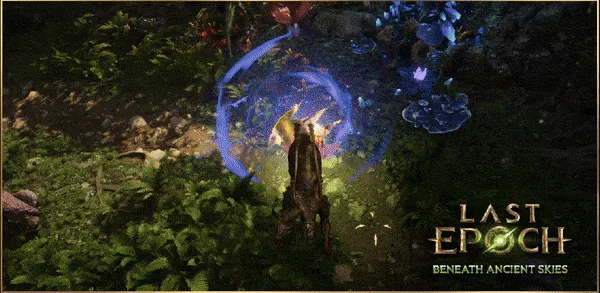
Evolutions add traits that change a Rift Beast’s abilities and rewards.
Primordial item rules and rewards
Rift Beasts dropped Ancient Bones, Primordial Materials, general loot, and occasional Primordial Uniques. Five types of Primordial Material were available through the hunt, although some had special acquisition conditions. Crystallized Hearts, for example, were associated with completing a lineage.
Skarven accepted Ancient Bones and Primordial Materials in exchange for items related to the mechanic. Players could trade with him at a cave entrance, after defeating a cave Rift Beast, or in The Garden during Chapter 10.
Patch 1.3 divided Primordial Items into two categories:
| Item category | Season 3 launch rule |
|---|---|
| Primordial Unique | A special Unique with a transformative effect; it could roll Legendary Potential and be used in the Eternity Cache |
| Primordial Exalted Item | An Exalted item upgraded with a Rune of Evolution so that a random Tier 7 affix became a sealed Tier 8 affix |
Only one Primordial Item of any kind could be equipped at a time. A character could not equip a Primordial Unique alongside a Primordial Exalted Item, two Primordial Uniques, or two Primordial Exalted Items. This restriction made the Primordial slot a build choice rather than a category that could fill every equipment slot.
Season 3 introduced 25 Primordial Uniques. Of those, 22 could be purchased from Skarven and three were exclusive Rift Beast drops. Their effects included unusual build-changing mechanics such as additional skill levels, a second critical-strike tier called Deadly Strikes, a T-Rex minion, or stronger idol effects.
The Rune of Evolution followed a different path. It required an item with at least one Tier 7 affix. Using the rune selected one Tier 7 affix at random, upgraded it to Tier 8, and sealed it. Sealing that affix opened a regular affix slot for further crafting. The Patch 1.3 notes described Tier 8 affixes as having between 50% and 100% additional effect over their Tier 7 versions.
The random selection matters when interpreting old crafting advice. The rune did not let the player directly select which Tier 7 affix became Tier 8. An item with multiple Tier 7 affixes therefore presented a different risk from an item with only one eligible Tier 7 affix. These were Season 3 launch rules and should not be assumed to describe the current crafting system without live-version confirmation.
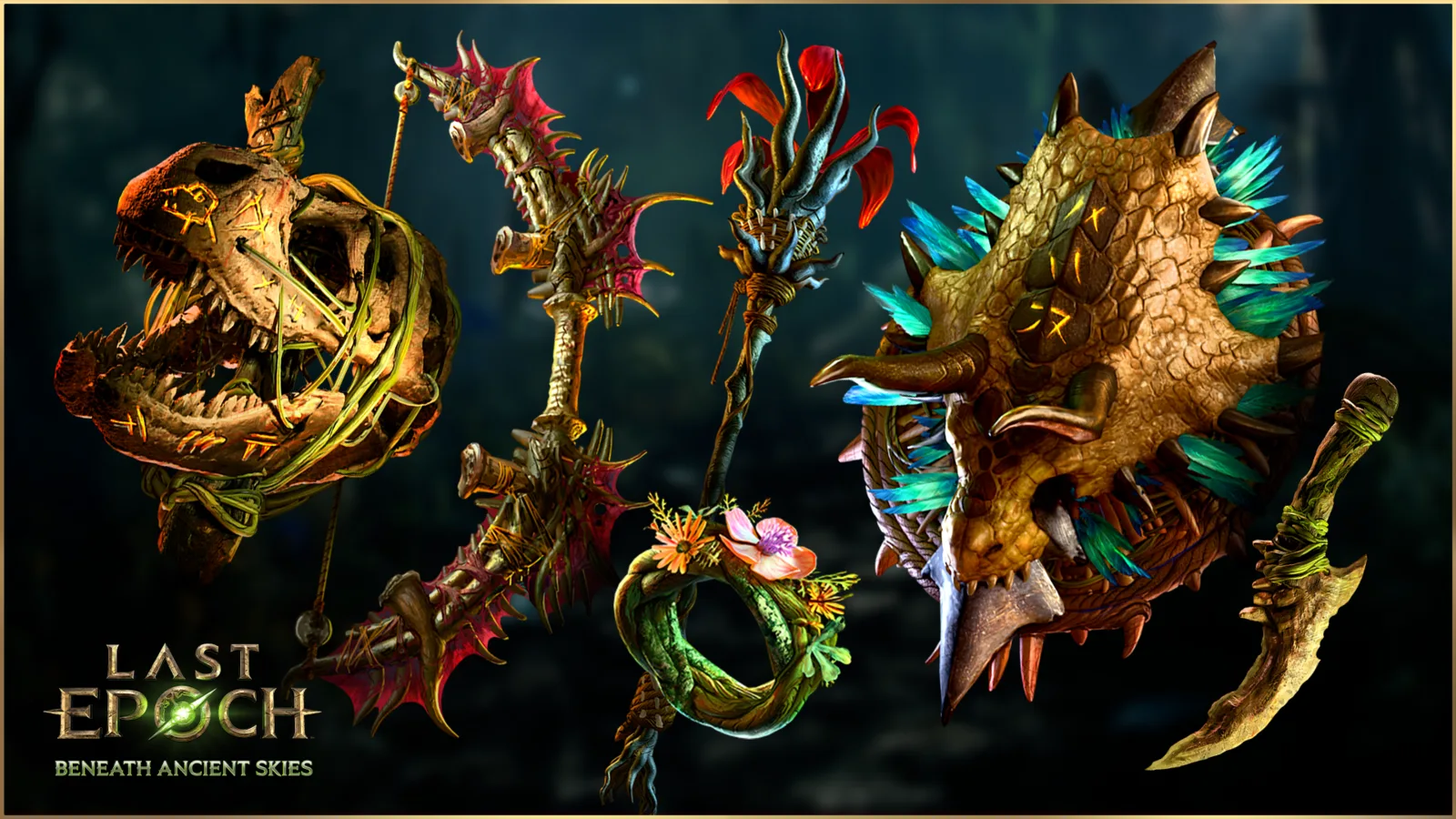
Season 3’s Primordial Unique collection is governed by the one-Primordial-item equipment limit.
Special Woven Echoes tied to the hunt
Patch 1.3 added three Woven Echoes connected to Rift Beasts:
- Rampant Coast placed the player against a heavily evolved Rift Beast with a Crystallized Heart. Completing it was part of increasing the maximum number of Evolutions in future lineages.
- Bloodline Glade featured a group of randomly evolved Rift Beast Champions guarding Primordial Exalted Items with Primordial Champion affixes.
- Nesting Grove involved protecting Rift Beast nests so that Rift Beast encounters could spread to surrounding Echoes. It could not add those encounters to Arena Echoes, Woven Echoes, or Cemeteries of the Erased, and the effect applied only to the first attempt at each affected Echo.
These Echoes were not interchangeable. Rampant Coast improved the lineage ceiling, Bloodline Glade focused on Primordial Exalted rewards, and Nesting Grove increased access to encounters across part of the Echo Web. Understanding that distinction was important when choosing which Season 3 activity matched a specific goal.
Lich, Necromancer, and minion changes
Beneath Ancient Skies substantially reworked the Lich mastery. Its passive tree received new choices involving health drain, ward interactions, dual wielding, and low-life play. Lich also gained the new skill Flay, a hybrid melee and spell ability that moved the character into melee range for a rending attack. Enemies killed by it could erupt into a damaging spell, while the skill tree offered ailment, critical-strike, triggered-spell, and pure-spell directions.
Several existing Lich skills changed alongside the new passive tree. Aura of Decay received damage-oriented work and conversion options, Death Seal was reworked as a defensive cooldown with limited uptime, and Rip Blood gained a line-shaped hit pattern with additional single-target options in its tree.
Necromancer received passive-tree updates centered on minion durability, leech, critical strikes, and clearer minion-focused paths. Assemble Abomination was also redesigned. The abomination no longer decayed over time; instead, it remembered the minion types used to create it and could devour matching minions later. Its rebuilt skill tree used those sacrificed minion types to shape its abilities.
The broader minion system also changed. At the Patch 1.3 launch baseline, characters gained 0.8% minion power per character level, producing 60% more minion damage and 60% less damage taken at level 100. Minions also took 60% less damage from dangerous enemy abilities.
A behavior toggle allowed minions to switch between Protect and Assassinate modes. Protect kept them closer to the player and focused them on nearby threats. Assassinate gave them a longer leash and encouraged them to remain on distant or higher-priority targets. AI changes also reduced unnecessary target switching, improved responsiveness at high movement speeds, and addressed cases in which minions ran back and forth or failed to follow efficiently.
All of these values describe the Season 3 patch. They are useful when reading archived builds or understanding why a Patch 1.3 build selected particular passives, but they are not a safe numerical baseline for Season 5.
Merchant’s Guild and quality-of-life additions
Season 3 upgraded the Merchant’s Guild with improved search, faster listing tools, new Guild Tokens, and Bazaar interface changes. Merchant Tokens removed the Favor cost of a purchase, and a free token was awarded on each rank increase. Black Market Tokens allowed the purchase and use of items that would otherwise require a higher rank while also removing the purchase’s Favor cost.
The Bazaar gained clearer price and unpriced-listing presentation, better searching for Unique, Set, and Legendary items, and a way to build a filter from an item already in the inventory. These changes belong to the Season 3 version of the faction and should not be substituted for the separate rules of later faction revisions.
Other Patch 1.3 usability improvements included:
- Per-rule customization for loot-filter ground beams and item icons.
- Additional identifiable sounds for valuable filtered drops.
- Bulk movement and cloning for stash tabs.
- Stash search macros for specific equipment types or affixes.
- Clearer forge controls and additional tooltips.
- Improved controller navigation through menus and tooltips.
- A reminder when ground item tooltips were disabled.
- A warning when an item had been left inside the forge.
- Offline access to cosmetics purchased through the in-game store.
- Customization of the Monolith Exit in the same general manner as a Town Portal.
- The ability to equip two instances of the same cosmetic type without obtaining the cosmetic twice.
What remains relevant when reading Season 3 guides
Season 3 material is still useful for understanding when Chapter 10, the Primal Hunt, Primordial Items, Flay, and the major Lich and minion revisions entered the game. It also explains references to Patch 1.3 mechanics found in archived builds, videos, item discussions, and crafting advice.
However, three boundaries matter when using that material now:
- Season 3 is historical. The current game is in Season 5 on version 1.5.2.1, so Patch 1.3 numbers must not be presented as current values.
- Launch events have ended. The Season 3 Twitch Drops campaign ran from August 21 through August 25, 2025. Its cumulative viewing rewards are not a current acquisition route.
- Later systems need later rules. Current builds, faction progression, crafting decisions, corruption strategies, and seasonal rewards should be checked against their current-season documentation rather than inferred from Beneath Ancient Skies.
For historical research, the shortest accurate summary is that Beneath Ancient Skies expanded the campaign into the Ancient Era and built a repeatable hunt around player-shaped Rift Beast lineages. Its defining reward decision was whether to end a lineage or keep evolving it, while its defining equipment decision was which single Primordial Item deserved the character’s one permitted Primordial slot.