You can make your own playable character in Last Epoch, but you cannot design that character’s physical appearance. As of version 1.5.2.1, you select one of five predefined class heroes rather than using a face-and-body character creator. Last Epoch uses fixed class heroes, with no documented editor for their gender, face, skin color, hairstyle, age, or body type.
What you can create is the character’s build and progression. You choose a class, develop skills and passives, equip different items, and eventually shape a specialized playstyle. Equipment and cosmetics can also change parts of the character’s visible presentation, but they do not replace the class’s fixed identity.
Several choices made around character creation affect where and how that character can play. The most important limitation is that online and offline characters cannot be transferred between modes. Decide which environment you want before investing time in a character.
What making your own character means in Last Epoch
The answer changes depending on what you mean by “make your own character.” Last Epoch offers extensive mechanical customization but limited identity and appearance customization.
| Character feature | Available | What it means |
|---|---|---|
| Choose a base class | Yes | Select one of five predefined heroes: Mage, Rogue, Primalist, Acolyte, or Sentinel. |
| Change face, hair, skin, or body | No supported option | The game uses predefined class models. |
| Choose another gender for a class | No supported option | Each class retains its predefined character identity and presentation. |
| Develop a custom build | Yes | Skills, individual skill trees, passive choices, attributes, equipment, idols, and blessings provide the main customization. |
| Change visible equipment | Yes | Equipped item models and cosmetic items can affect the character’s look. |
| Choose online or offline play | Yes | This is a permanent separation because characters cannot move between the two environments. |
| Choose seasonal or persistent play | Yes | This determines whether the character starts in the current season or the established persistent environment. |
| Add challenge rules | Yes | Normal, Hardcore, and self-found choices change death or item-sharing rules. |
This distinction is important if your purchase or play decision depends on representation. Choosing Rogue does not let you redesign Rogue into a different person, while choosing Primalist does not open a separate appearance screen for an alternate version of that hero. If a custom face, body, or gender is essential to your role-playing, Last Epoch’s current character system does not provide that type of control.
The five classes are predefined characters
Last Epoch currently has five base classes and 15 masteries. Each base class is presented as a particular person with an established visual identity. The official class descriptions identify Mage as an older male character, Rogue as female, Primalist as a male northern warrior, Acolyte as female, and Sentinel as male.
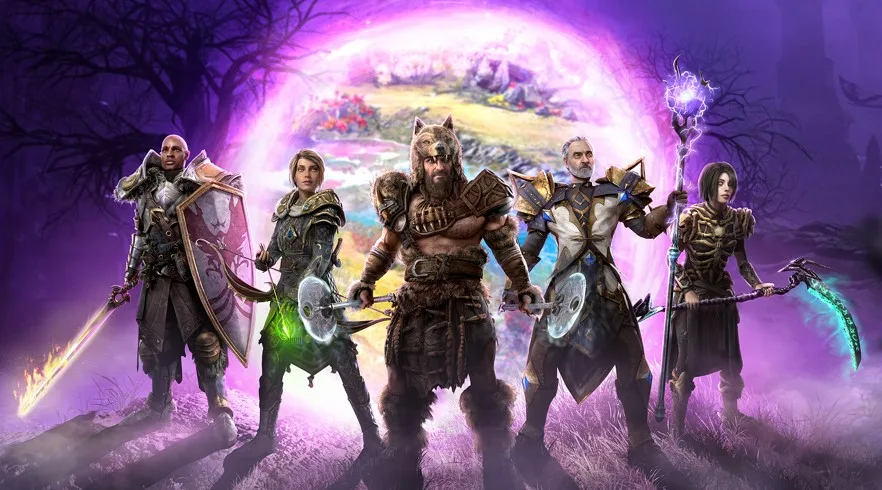
The class lineup shows that character creation starts from predefined heroes.
The class selection therefore serves two purposes at once. It determines the hero you see, and it establishes the family of combat options available to that character. You are not choosing a neutral body and attaching a class afterward.
The five-class lineup is:
- Mage: a predefined older arcane practitioner.
- Rogue: a predefined female bow-and-blade fighter.
- Primalist: a predefined male warrior connected to nature.
- Acolyte: a predefined female practitioner of forbidden magic.
- Sentinel: a predefined male armored warrior.
This section is not a recommendation to select one class over another. The practical point is that class and visible identity are connected. If you dislike the fixed presentation of a class, there is no supported appearance-editor step that changes it while preserving that class selection.
Your class choice should also be treated differently from ordinary build experimentation. Skills, equipment, and many progression decisions give you room to revise how the character plays. They do not convert the character into another base class or replace its original model. Choose the class whose identity and available play space you are willing to keep, then customize the build inside that boundary.
Choose online or offline before investing time
Online and offline characters exist in separate environments. Official support information states that they cannot be transferred in either direction. An offline character cannot later be uploaded for online cooperation or trading, and an online character cannot be converted into an offline save.
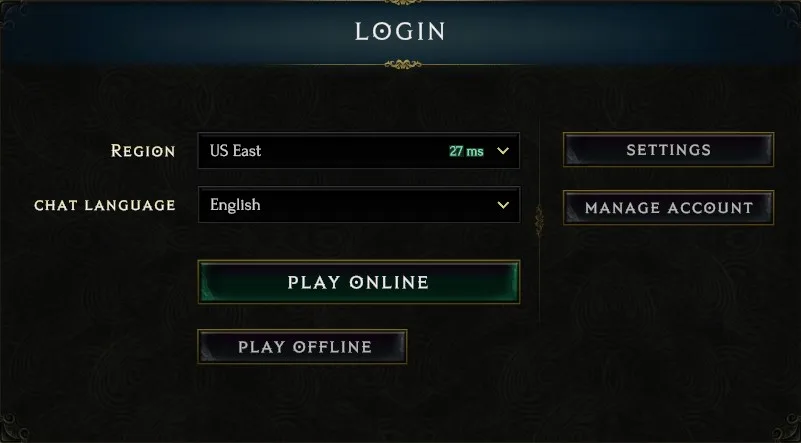
Login-menu example showing Play Online and Play Offline; choose the environment before creating a character.
Choose online if you expect to play with other people, use the online economy, trade, or participate in server-based activities. Last Epoch supports online cooperative play for groups of up to four players. An online character depends on the online environment even if you spend much of your time playing alone.
Choose offline if you want a fully offline experience and do not need that character to join online players or participate in online trading. Offline is a separate destination, not a temporary connection setting for the same character.
A useful decision test is simple:
- Ask whether this exact character might ever need to join a friend.
- Ask whether trading or the online economy matters to the intended build.
- If either answer is yes, create the character online.
- If both answers are no and offline access is the priority, create it offline.
- Do not rely on a future transfer to correct the decision; the two character types cannot be converted.
Creating a second character later remains possible, but it does not move the first character’s progress across the boundary. You would be starting a separate character in the other environment.
Pick seasonal or persistent progression
After deciding on online or offline play, decide whether the character should join the current season or the persistent environment. The current verified season is Season 5: Rage of the Frostborn.
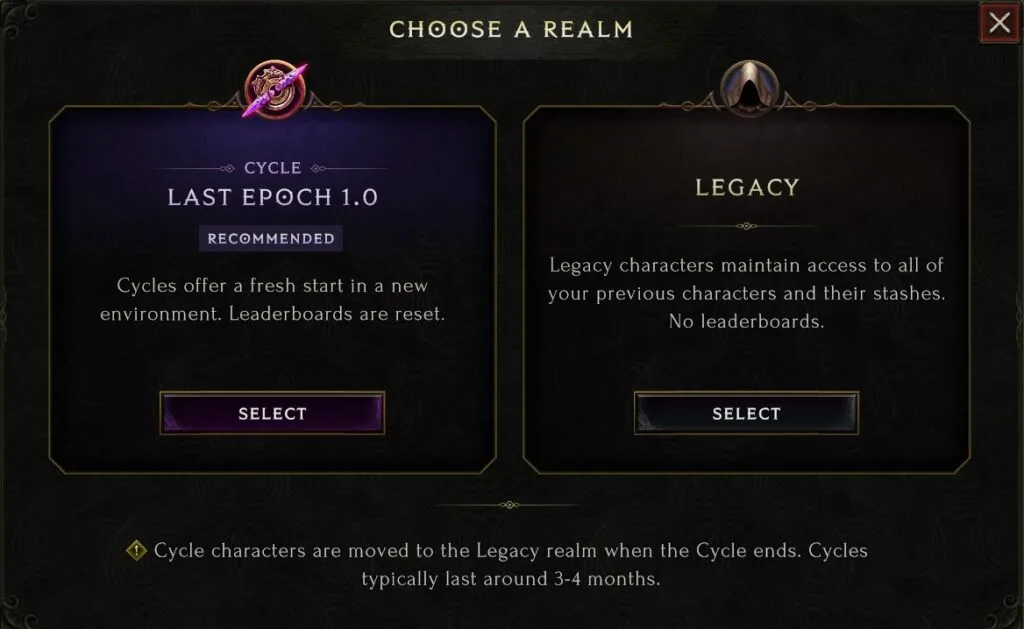
Historical version 1.0 realm-selection example using Cycle and Legacy labels; current seasonal labels and timing may differ.
A seasonal character begins in the current seasonal environment. This is the appropriate choice when you want the season’s fresh progression context and current seasonal competition. Seasonal characters do not disappear merely because a season ends; the game’s season transition moves characters and their stored items into the persistent environment.
A persistent character belongs to the established environment where previous characters and stored resources remain available. This is better when your goal is to continue an existing collection rather than begin within the current season’s fresh context.
Older guides may refer to a “Cycle” when describing this split. The current official release material uses “Season” for Season 5, so follow the labels shown by the current client rather than assuming an old screenshot matches the present wording.
This choice is separate from appearance. Neither seasonal nor persistent creation adds a face editor, an alternate gender option, or a new base-class model. It changes the character’s progression environment, not who the predefined hero is.
Set death and self-found rules deliberately
Character creation can also apply rules that make progression more restrictive. These settings matter far more to the playthrough than cosmetic details, so read them before confirming the character.
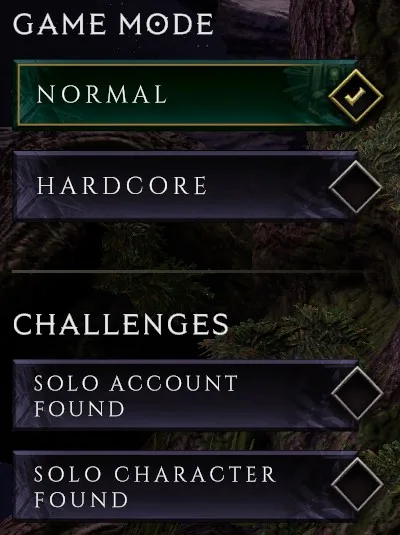
Review Normal, Hardcore, and self-found restrictions before confirming.
Normal is the standard choice. Death does not permanently end a Normal character or deduct character experience. This is the safest option for a first character or for experimenting without a permanent-loss condition.
Hardcore introduces a permanent consequence for death in relation to the Hardcore environment and ladder. A dead Hardcore character moves into Normal and can no longer compete on the Hardcore ladder. Select it only if that consequence is part of the experience you want.
The self-found challenges restrict access to shared resources:
- Solo Account Found is designed for solo play while allowing eligible characters to share the account’s stash and crafting materials within that ruleset.
- Solo Character Found isolates the individual character. It begins without inherited stash contents, crafting materials, or gold and focuses progression on what that one character obtains.
These options do not make the hero’s visual model more customizable. They customize the rules surrounding progression. If your goal is simply to play alone, distinguish that preference from wanting every item to be earned by one isolated character. Offline play, solo play, and Solo Character Found are related ideas, but they are not interchangeable decisions.
Before selecting a challenge, decide whether you want to share resources with future characters. A strict single-character ruleset can be satisfying, but it also prevents the convenience of preparing equipment or crafting resources on another character. That tradeoff should be intentional rather than discovered after the playthrough has begun.
Where the real character customization happens
Last Epoch concentrates customization in combat systems. The current class overview lists more than 120 skills across five classes and 15 masteries. Skills have their own trees, while class passive trees, equipment, attributes, idols, and blessings add further ways to change performance.
That means two characters using the same fixed class hero can play very differently. One may specialize in a different set of skills, convert how a skill deals damage, prioritize different attributes, or use equipment that enables another interaction. These choices are the game’s answer to “making the character your own.”
The distinction can be summarized as follows:
- Identity is mostly fixed: the base hero, model, and class presentation are predefined.
- Rules are selected at creation: online or offline, seasonal or persistent, and optional challenge restrictions determine the character’s environment.
- Combat identity is developed through play: skills, passive choices, equipment, and other progression systems define what the character actually does.
- Visible style can change within limits: equipment art and cosmetic items can alter the on-screen presentation without creating a new face or body.
The game has continued to update character visuals, equipment models, armor art, skill effects, and cosmetics. Season 5 material, for example, includes updated item visuals and a cosmetic back item. Those additions provide more ways to alter what appears on screen, but they should not be confused with a physical character creator.
A safe character-creation checklist
Use this checklist before confirming a new character:
- Check the fixed class model. Make sure you are comfortable playing the predefined hero because the class model is predefined.
- Choose the class for both identity and mechanics. The character model and class access come together; you are not selecting them separately.
- Decide between online and offline. Treat this as permanent for that character because transfers are not available.
- Choose seasonal or persistent progression. Select the current season for its fresh environment or persistent play for established characters and resources.
- Select Normal or Hardcore intentionally. Understand the death consequence before starting.
- Review self-found restrictions. Decide whether resources should be shared at the account level or isolated to this character.
- Develop the custom build after creation. Use skills, passives, equipment, attributes, idols, blessings, and cosmetics to shape the character within the selected class.
If you already created the character in the wrong online or offline environment, the solution is to create another character in the correct environment. Progress cannot be transferred across that divide. If the issue is only the build, the game provides much more flexibility through its progression systems than it does for physical appearance.
What not to expect from the current creator
Do not begin a character expecting a later face editor, gender switch, body-type selector, or skin-color menu based on old community discussions. Players requested those features in historical forum threads, and older discussions referenced their possible consideration after launch. That is not the same as confirmation that they exist in version 1.5.2.1 or that they will arrive on a particular schedule.
The dependable current answer is narrower: Last Epoch lets you create and develop your own build using a predefined class character. It also lets you choose the character’s play environment and challenge rules. Physical appearance uses a predefined class hero rather than a custom character editor. Make the online/offline and ruleset decisions carefully, then treat skills, equipment, and progression as the primary tools for making the character your own.